

![Nollywood actor CJay Nwoks dies in Lagos hospital [VIDEO]](https://newsroompulse.com/wp-content/uploads/2026/10/CJay-Nwoks.jpg)
Obi Media Team Defends Call For Tinubu’s Resignation
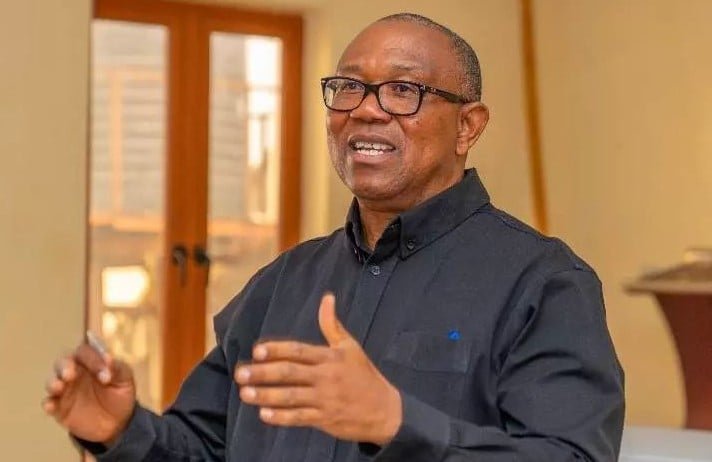

The media team of the presidential candidate of the Nigeria Democratic Congress (NDC), Mr. Peter Obi, has defended his recent call on President Bola Ahmed Tinubu to resign from office, insisting that the Presidency’s response failed to address the substance of the issues raised regarding governance and the worsening living conditions of Nigerians.
In a statement issued on Tuesday by the spokesman of the Peter Obi Media Reach (POMR), Idris Zekeri Jnr, the group said Obi’s position was informed by what it described as the evident failure of governance, reflected in the rising level of poverty, insecurity, unemployment, and economic hardship across the country.
According to the statement, rather than responding to concerns about leadership and accountability, the Presidency focused on what it called “shadow chasing,” including discussions about Nigeria’s system of government and the outcome of recent elections.
The media office argued that Obi’s comments were inspired by the example of a British Prime Minister who resigned after acknowledging that his administration had failed to sufficiently improve the living conditions of citizens.
“Our principal’s comments were not about whether Nigeria operates a presidential or parliamentary system. They were about a fundamental principle of leadership: accepting responsibility for outcomes,” the statement said.
The group further rejected suggestions that resignation was incompatible with presidential systems, citing examples such as former United States President Richard Nixon, former Brazilian President Fernando Collor de Mello, former Peruvian President Pedro Pablo Kuczynski, and former Argentine President Fernando de la Rúa, all of whom resigned under varying circumstances.
The Obi media team also recalled that President Tinubu, while in opposition, had repeatedly called for the resignation of former President Goodluck Jonathan during the fuel subsidy protests and after the abduction of the Chibok schoolgirls, despite Nigeria operating the same presidential system.
The statement claimed that poverty levels had risen significantly under the current administration and alleged that increasing public debt had not translated into improved living conditions for ordinary Nigerians.
It also questioned the government’s emphasis on economic indicators such as Gross Domestic Product (GDP) growth, revenue generation, and stock market performance, arguing that such figures had not resulted in meaningful improvements in the welfare of citizens.
On security, the media office acknowledged isolated successes by security agencies but maintained that insecurity had become more widespread across the country, affecting farming, business activities, and the general safety of citizens.
The statement further defended Obi’s record as former governor of Anambra State, asserting that his administration delivered substantial improvements in education, healthcare, infrastructure, security, and fiscal management, while leaving savings for the state.
The media team also criticized what it described as attempts to dismiss concerns over governance as political grandstanding, insisting that patriotism required citizens to speak out when government policies failed to meet public expectations.
Commenting on the recent elections, the group dismissed claims that the outcomes represented an endorsement of the administration’s performance, alleging that the polls were flawed and warning that continued electoral shortcomings could undermine public confidence in democracy.
The statement additionally questioned what it described as misplaced national priorities, citing budgetary allocations that, according to the group, favoured elections over primary healthcare.
Obi’s media office maintained that the call for resignation was neither personal nor politically motivated but was intended to promote a culture of accountability in public office.
It urged the government to focus on tackling insecurity, poverty, unemployment, power shortages, declining productivity, and the growing loss of public confidence in governance.
“Nigeria deserves leadership that listens more than it lectures, serves more than it celebrates itself, and accepts responsibility rather than constantly searching for excuses,” the statement concluded.